By Dana Porter Carson and Robert Porter
In 1876 a group of prominent businessmen, factory owners and lawyers from the Auburn-Lewiston area purchased the Nathaniel Pinkham farm in South Harpswell and established a summer colony retreat for their families. They called it the Auburn Colony.
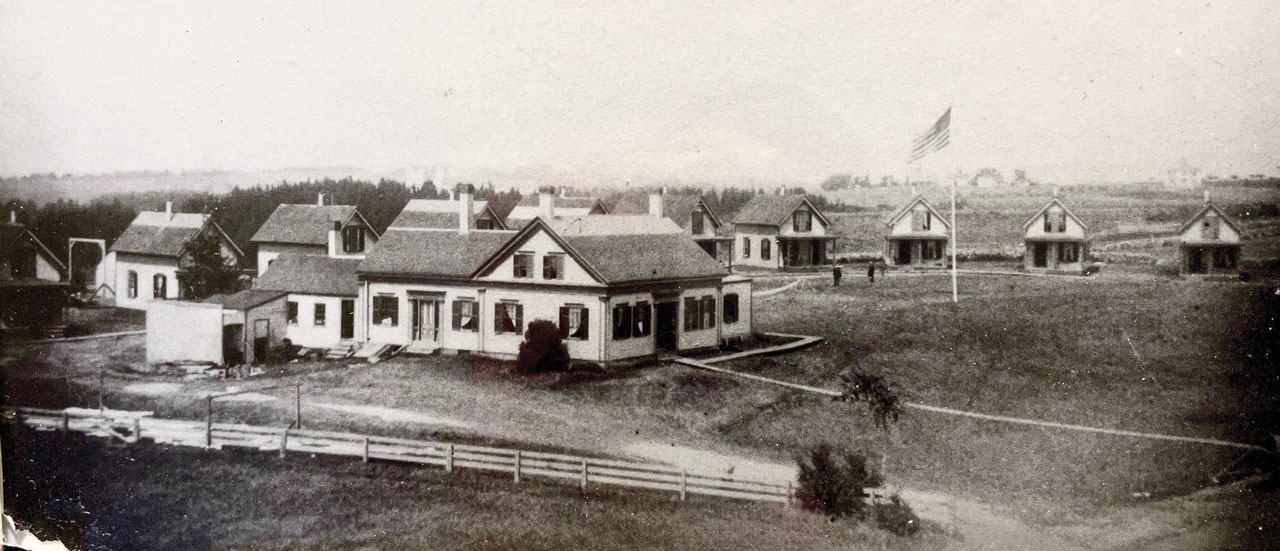
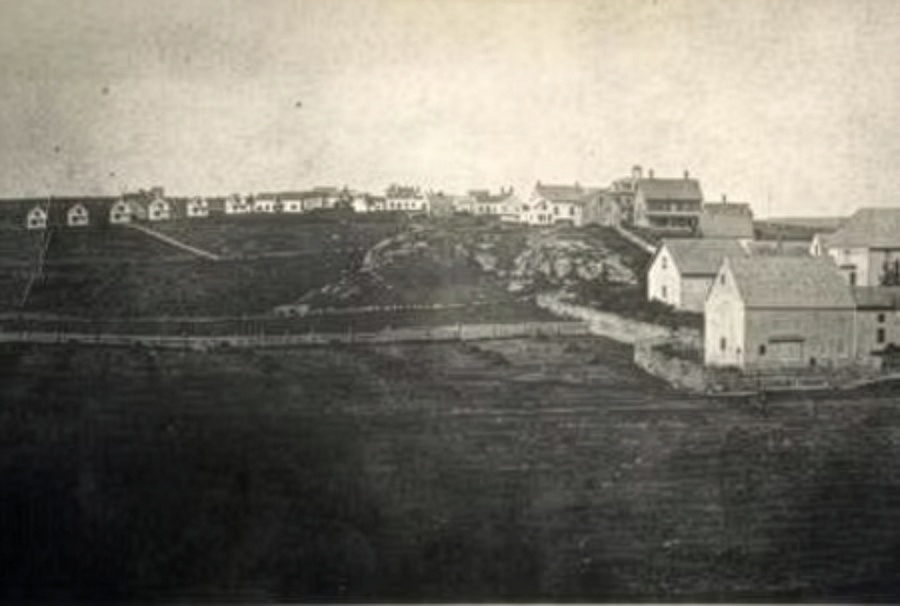
Captain’s Nathaniel Pinkham’s farmhouse, built in 1789, stood approximately where today’s tennis courts are located. The 20 original Auburn Colony cottages are shown behind the farmhouse. They were built in 1877 and burned down in 1899. (Photo/Wilson family)
Among the early “rusticators” along the coast, they desired “a place... for the purpose of securing the material advantage of society, health and recreation,” and were “impressed with the healthy situation, beautiful surroundings, ease of access and fine adaptation to their purpose” of Harpswell. This was at the time of the Gilded Age in America, and the original 20 families who built cottages in 1877 were representative of Maine’s upper crust of the era.
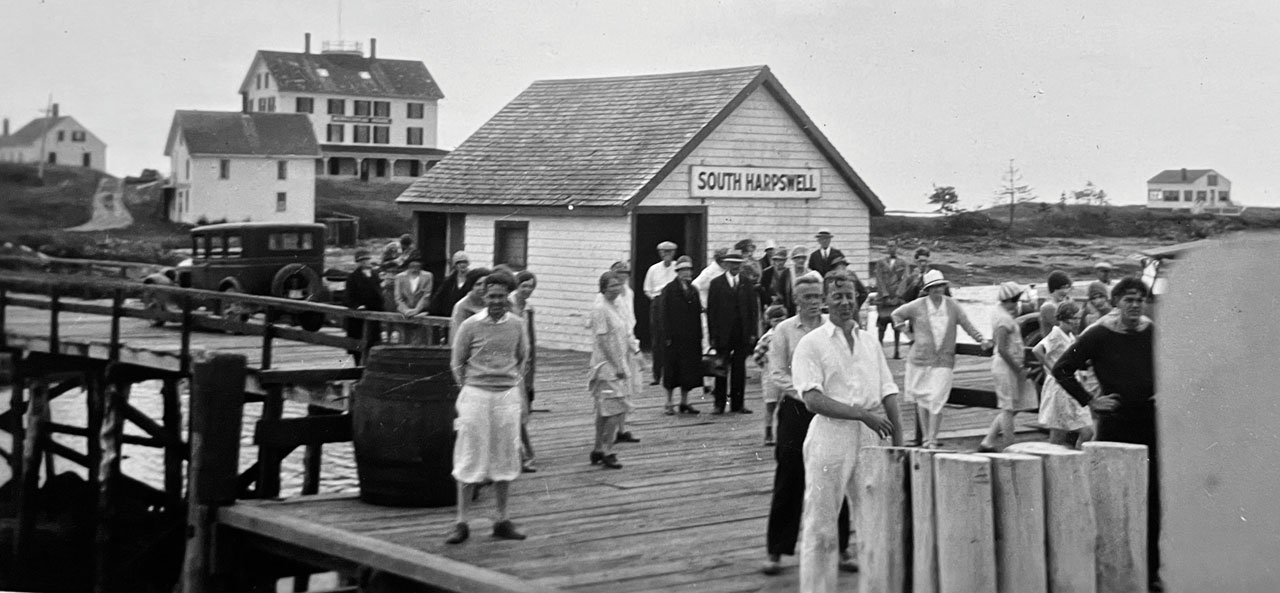
Dr. Currier McEwen (dressed in white in the foreground) awaiting the arrival of the steamer from Portland at the South Harpswell landing in the early 1920s. (Photo/McEwen family)
These wealthy urban elite sought a simpler lifestyle in pleasant surroundings for their summers while not completely foregoing some of the benefits of their elegant lives during the rest of the year. Their winter homes may have been grand structures on large lots, but in Harpswell they purposefully chose to build 20 small 17x30-foot cottages of uniform style and appearance clustered cheek by jowl on tiny lots near a communal dining hall where they ate all their meals. As one resident said, “It was like peas in a pod!”
In contrast to their simple accommodations and meals, however, they chose in some cases to bring their own coachmen and horses, and later chauffeurs and limousines. Most of the owners, and the women in particular, wore elegant but bulky and long clothing even while boating, sunbathing, playing tennis, or enjoying a clambake.
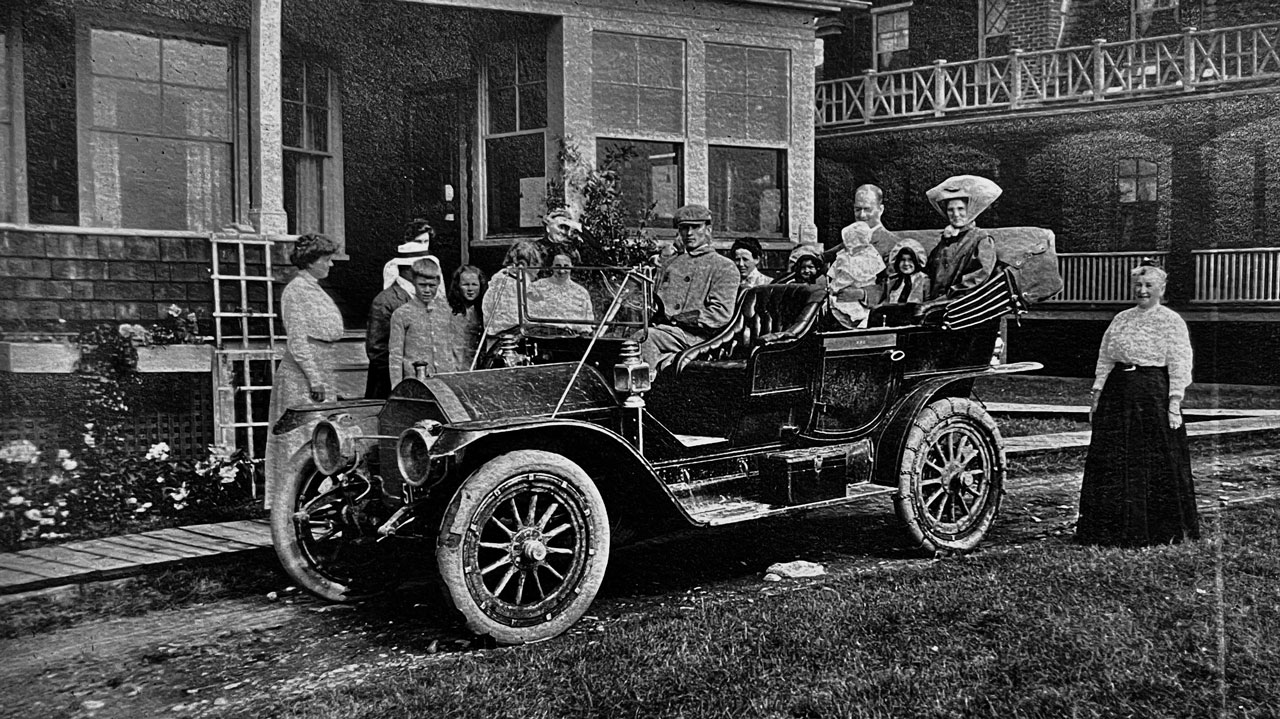
A 1916 photo of the E. Farrington Abbott family preparing for a picnic in its chauffeur driven car, a 1910 Knox Model R, built in Springfield, Mass. The family drove the car from Auburn, and the damaged state of its tires testify to the road conditions of the era. (Photo/McEwen family)
A Times-Record journalist in 1976 aptly imagined the scene. “It was an elegant place to spend a summer, even by the standards of the romantic era: Ladies on the lawn played croquet, gliding over the grass in their feathered hats and grass-length, billowing skirts.” Like Harpswell’s large tourist hotels of the era, the Colony employed local people to maintain the cottages and grounds, work in the communal dining hall, provide the Colony residents with locally caught seafood and locally grown vegetables, and take residents on fishing and sailing excursions.
When the Colony’s original 20 cottages burned to the ground in 1899, many of the original owners and a few new members rebuilt 14 new dwellings around the undamaged dining hall and recreation hall. This time, perhaps a bit tired of roughing it in small undistinguished homes, they rebuilt 14 much larger shingle-style cottages, each one different from the other, 10 of which still survive today.
Until the road to Brunswick was paved, it was a time-consuming journey to reach the Colony from Auburn. There was a buckboard that made the roundtrip from Harpswell to Brunswick twice a week, but the road was so bad and the ride so uncomfortable that no one made the journey by horse and buggy unless absolutely necessary. The easier but time-consuming way was to take the Grand Trunk Railway from Lewiston to Portland, spend the night there, and then travel by steamer from Portland to South Harpswell. For many, the steamer’s arrival became the social highlight of every day and Bobby Bibber’s band played on the wharf to greet passengers. By the 1920s many Colony families had automobiles and seven had chauffeurs. The growing fleet of cars outgrew the barn from the old Pinkham farm, so a 16-stall garage was built. Electricity finally reached the Colony in the late 1920s.
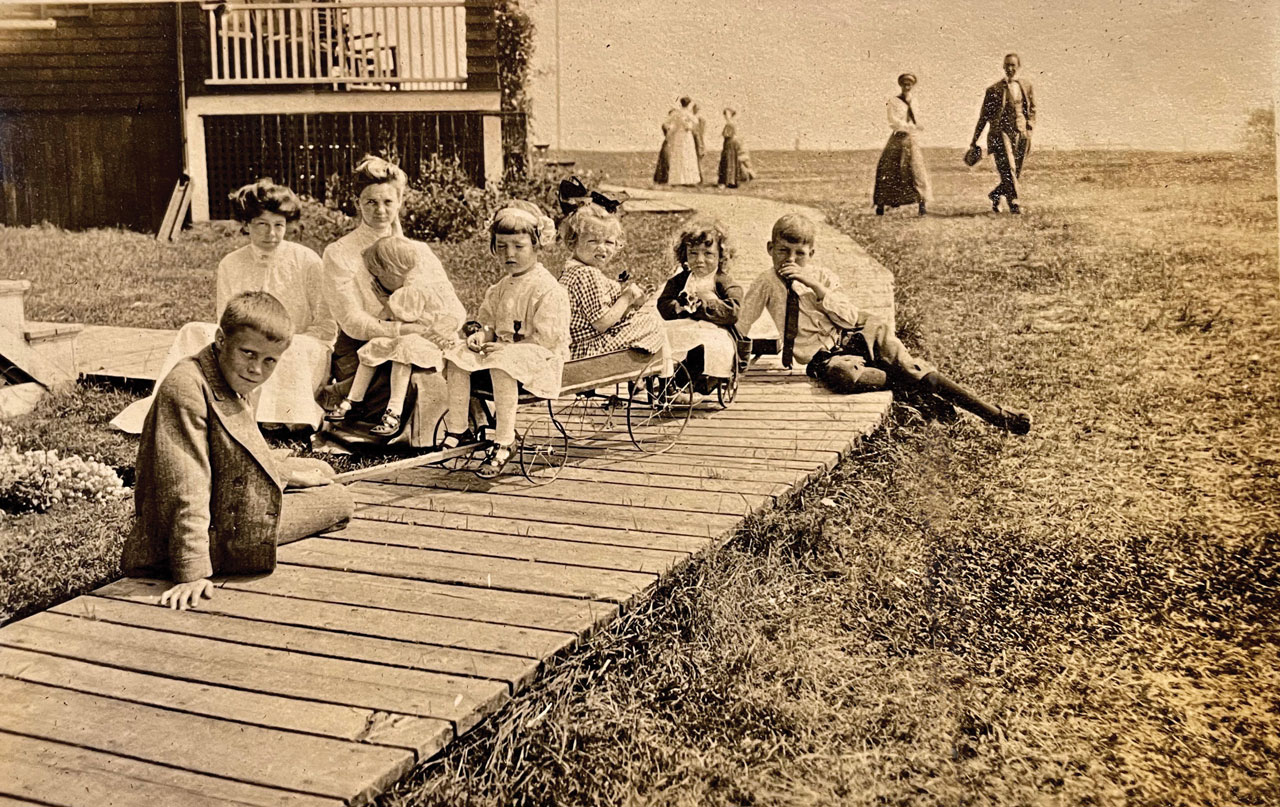
Colony children relaxing on the boardwalk in the early 1916. (Photo/McEwen family)
Daily activities for Colony residents revolved around three meals a day served in the dining hall, open June 15 to Sept. 15. Coat and tie were required for men at dinner (a tradition that survives today with modifications). An annual clambake took place every August to celebrate the Colony’s founding in 1876. The Colony was always a center of social activity for both summer and year-round residents alike. On most Sunday evenings, Dr. Rose, a Universalist minister, preached in the Colony recreation hall to people from all over Potts Point, and Mrs. McCandless, a Colony cottage owner and professional opera singer, led the community in song. Once a year Elijah Kellogg preached at the service. From 1901 to 1929 the recreation hall hosted frequent Saturday night dances. Arctic explorer Admiral Robert and Mrs. Peary from Eagle Island and cottagers from Haskell Island sometimes joined the dances and other activities.
The summer days were filled with activities like tennis, croquet, bowling, swimming, baseball with children from all over the Point, and boating, especially sailing. Steve Toothacher from Potts Point would take residents sailing, and Everett Getchell from Ash Point took them for island picnics on his lobster boat. In the evening residents strolled on the boardwalk that ran in front of their cottages, down to the beach, and to the dining hall. They could usually find a game of bridge or a party in one of the cottages. In the recreation hall there were plays, minstrel shows and salmagundi.
World War II brought hard times and changes to the Colony. Ruth Weeks, a year-round Harpswell resident and fourth generation descendant of several of the 1876 Colony founders, told the Lewiston Sun Journal in 1998, “I remember the hard times. During the war, a lot of people couldn’t get to their cottages. I never thought it was going to revive as it has.” Post-war trends that damaged the viability of Harpswell’s big hotels and regular steamboat service also affected the Colony. With travel made easier with better highways and airline routes, with more people owning cars, and with the desire of families to explore new destinations, fewer and fewer families wanted to spend every summer in the same place. And Colony owners were no longer wealthy urban elites with servants who could afford to spend all summer in Harpswell.
Despite these challenges, the Colony today survives much as it was before World War II. During its first 50 years, many cottage owners spent the entire summer in Harpswell and developed a strong sense of family and community. After the war that same sense of family and community continued. Descendants of owners from those early years, such as the Dana, Abbott, Cushman, Currier, Pickard, Little, Rose, Cunningham/Reed/Yancey, McCandless/Brewer, Porter, Herold and Laird families, still spend time at the Colony every summer to this day.
The Auburn Colony remains a place to escape the urban heat and busy lifestyles, where residents still enjoy tennis, boating, clambakes, socializing and regular dinners in the communal dining hall (reportedly the last such summer colony communal dining facility in Maine).
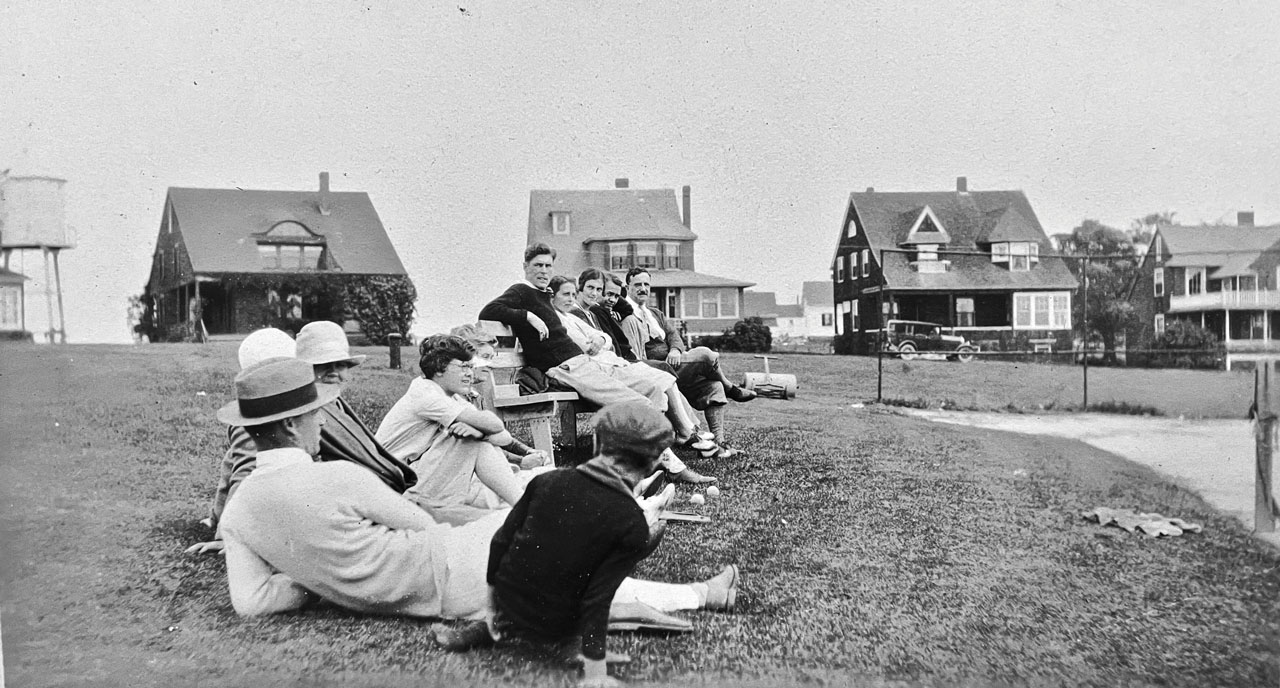
Members of the McEwen, Currier, and Porter families enjoying a tennis game circa1928. The four cottages in the background would burn down in the early 1930s and in 1948. (Photo/Currier McEwen family)
And in a nod to the changed demographics of Harpswell and changed economic conditions, it has opened its dining hall to associate members, many of whom are retirees who have moved here from urban areas throughout the Northeast. The Colony’s 21st-century owners and associates remain keen to maintain Colony traditions well into the future.
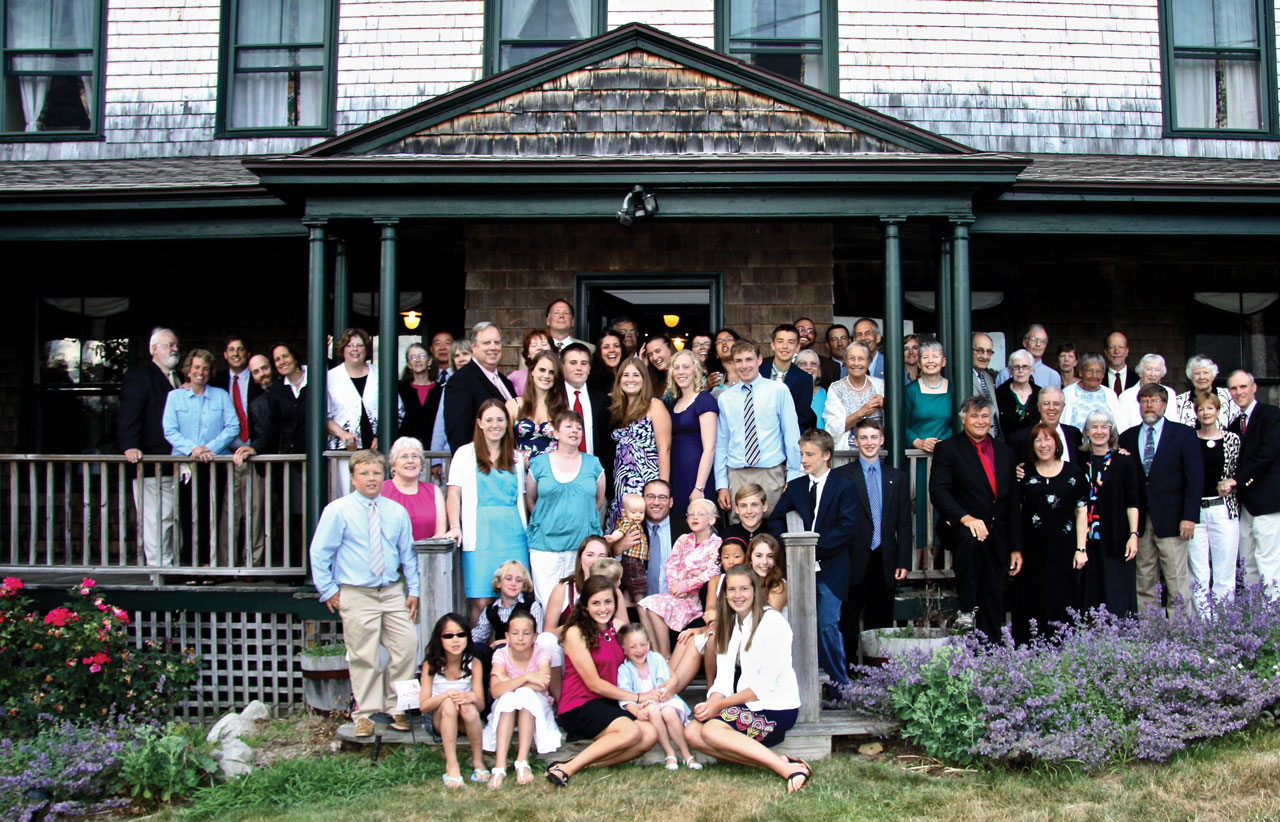
Sixty-seven members of the Abbott and Dana families pose on the front steps of the dining hall in 2011. Family members of original cottage owners regularly hold reunions at the Colony. This photo contains sixth generation descendants of an original cottage owner. (Photo/William Menke)


0 Comments