By Peggy & Betsy Orlando
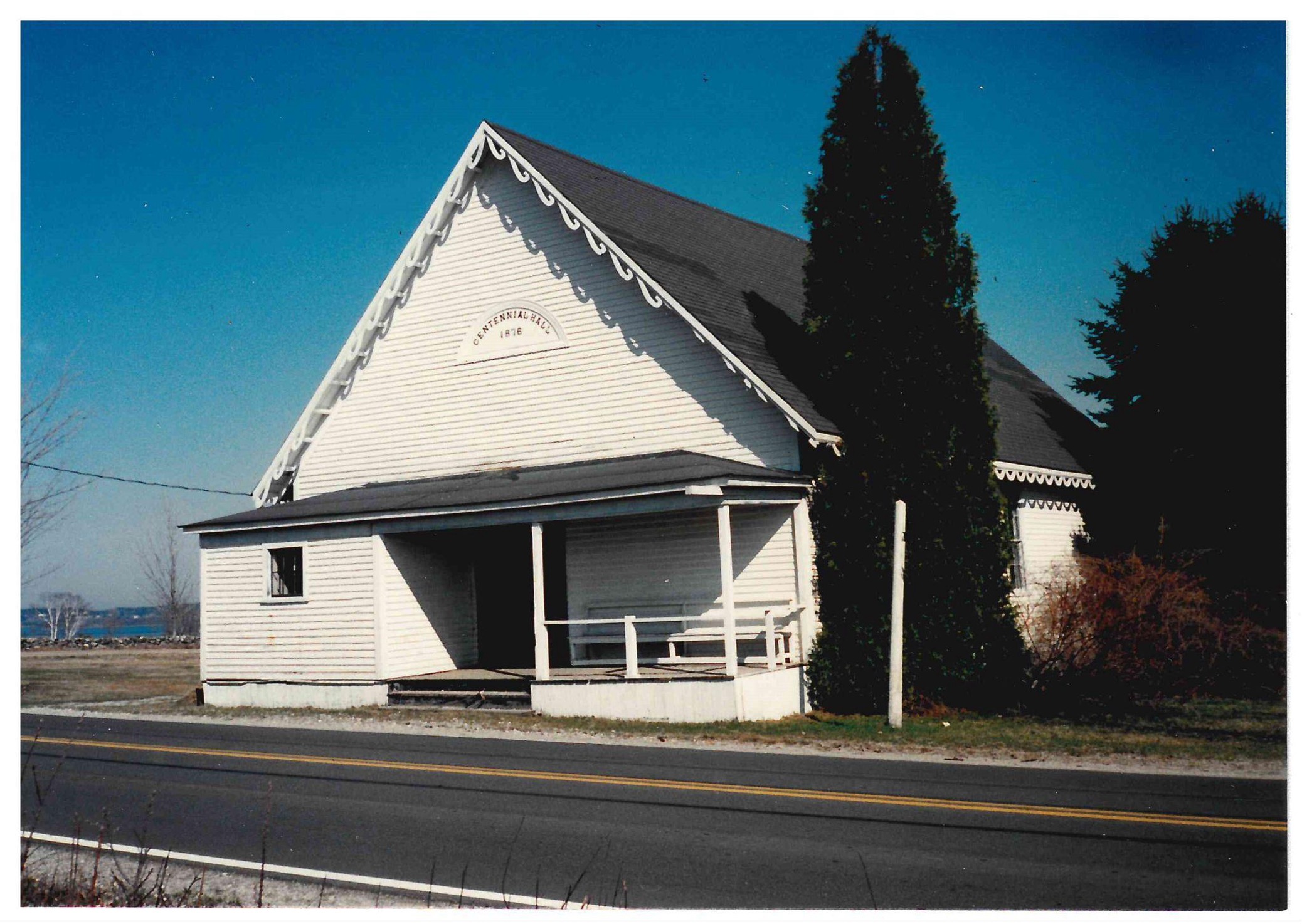
Centennial Hall in Harpswell Center stands as a resilient anchor of coastal community spirit and cultural heritage. Located at 936 Harpswell Neck Road, this understated landmark has evolved from a 19th century patriotic monument into a hub for the arts, local theater, and horticulture. Also used by the Harpswell Historical Society for local meetings, this building has remained a gathering point for generations.
Centennial Hall was built in 1876 by the residents of Harpswell to celebrate the United States Centennial on land owned by Captain Arthur Webber. The Hall was erected by a group of townspeople who felt the need for a meeting hall other than a church. Well into the 1940s and 50s, its walls echoed with the sounds of town suppers, community dances, recitals and plays. As the mid 20th century progressed, the hall fell into disuse and disrepair. Many locals were worried about the deterioration of a building that held important history and memories.
The last private owner of the original plot of land (and the building) was Edwin Thompson Jr. Thompson had submitted plans to Harpswell’s Planning Board for an eight-lot subdivision, but the plans did not include Centennial Hall. Fortunately, Thompson was in contact with the president of the Harpswell Garden Club at the time, Mrs. Spinney, who mentioned the idea of moving the building instead of demolishing it. Mrs. Spinney, however, thought that the Garden Club alone would not be able to afford to own the building. Luckily, Centennial Hall was built in a community that valued and still values historical preservation.
When it was evaluated for tax purposes in the year 1900, the building was estimated to cost $300. Ninety years later, the Harpswell Historical Society, led by Peg Newberg, who was president at the time, raised over $56,000 to deconstruct and move the building. In 1993, the Harpswell Historical Society officially acquired the deed to Centennial Hall from Mr. Thompson. Once moved, its new location would allow for Centennial Hall to neighbor other historical landmarks, including the Elijah Kellogg Congregational Church, Bailey’s Store (the once general store now turned into Harpswell Historical Society Museum), and the Old Town Meeting House. The Old Town Meeting House, built between 1757 and 1759, is the oldest surviving meeting house in Maine and a National Historic Landmark, making this relocation a more fitting place for Centennial Hall. Additionally, the plot of land it sits on now is bigger than the original.
Photographs recovered by the Pejepscot Historical Society, along with an explanation from Newberg, depict the strategic move that took place in July of 1994. To protect the structure, the Historical Society partnered with the Civic Committee of the Harpswell Garden Club in an ambitious engineering effort. They arranged to have the building deconstructed by Copp & Sons, a family business still in existence today, and moved to a plot of land already owned by the Garden Club. Chip Black, a Harpswell resident and retired builder, volunteered as project coordinator working between the Historical Society and the movers. The roof, and two halves of the main structure were individually placed on tow trucks.
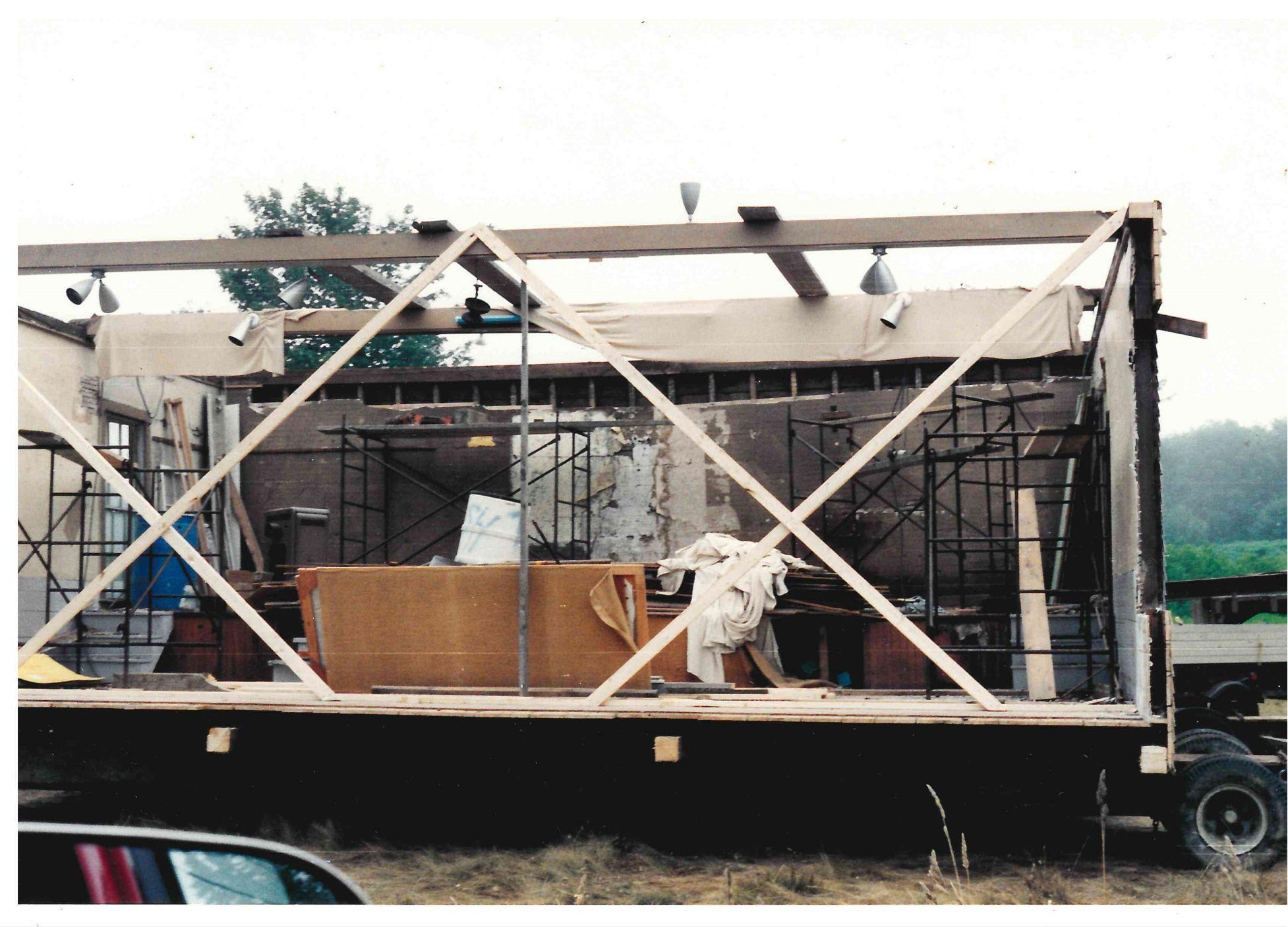
Deconstruction on moving day
These photos show what the original interior and exterior would have looked like: white paint on the siding, large, low-hanging black roof, and grey paint covering the interior wooden boards of the walls. The original building had a small porch on the right side of the building where a few benches provided available seating just feet away from route 123. Now the building is more protected, nested within the trees of Anne Frances Hodgins Memorial Park.
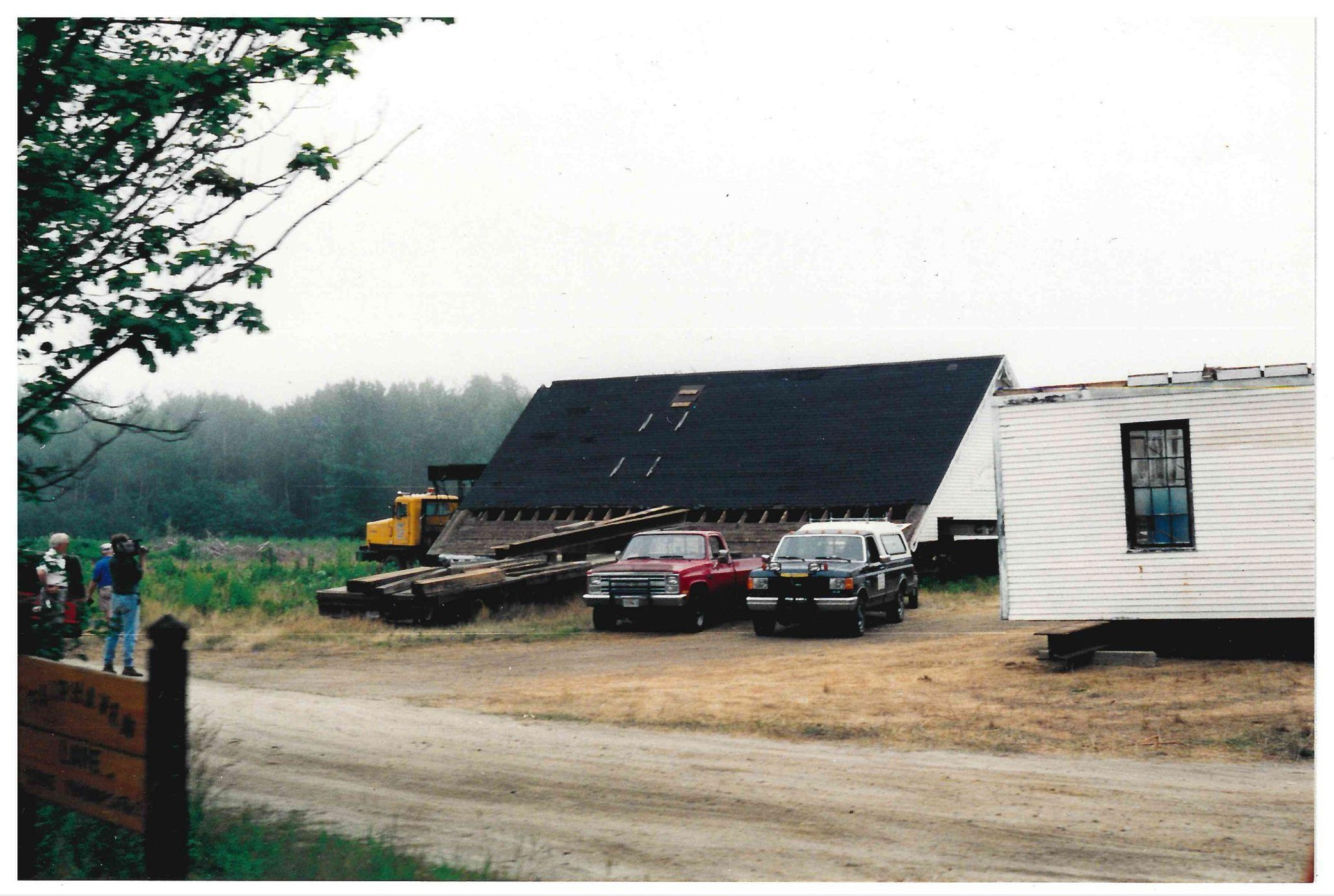
Separation of the roof
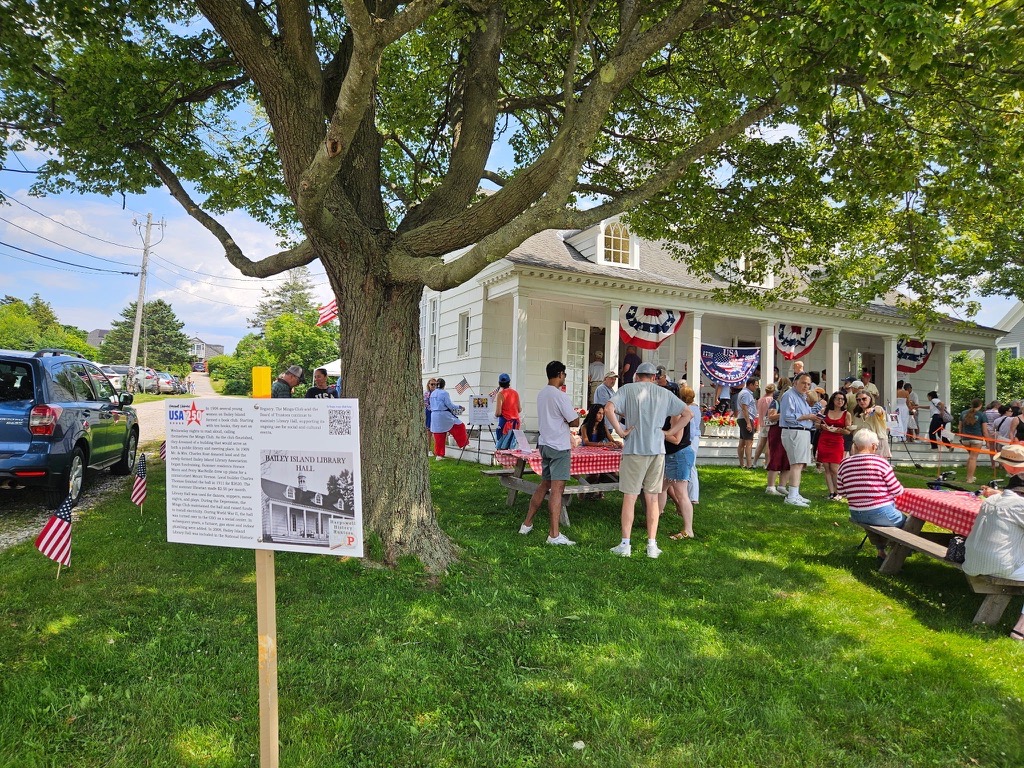
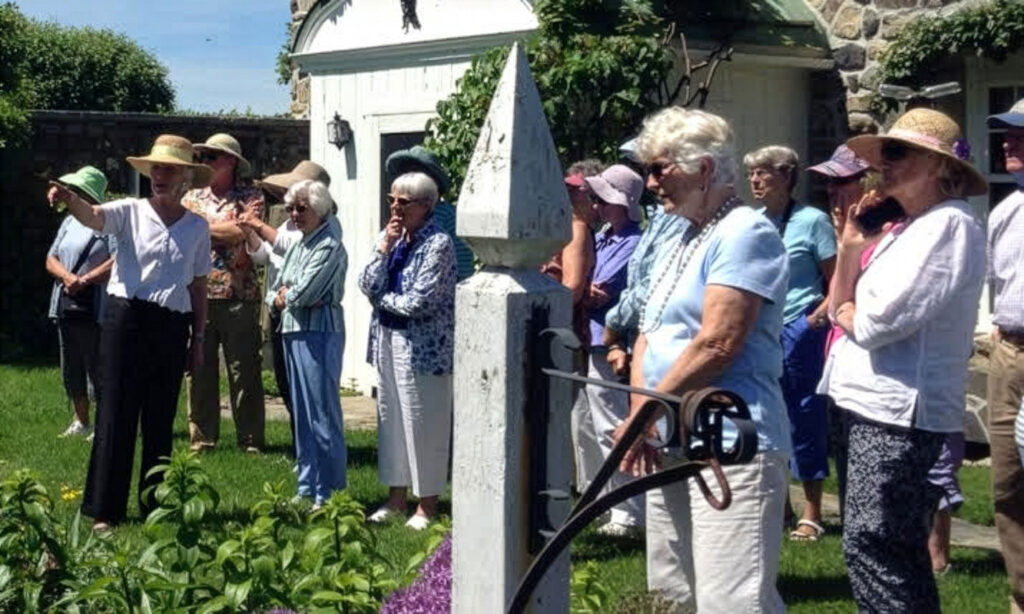
In years past, the King’s Daughters used Centennial Hall to host fairs, and the Harpswell Community Theatre would put on summer and holiday productions. The Hall and surrounding garden make for a picturesque scene worth returning to, whether for quality social time or an independent stroll in a quiet place. It is the wish of current Harpswell residents and the Historical Society that the Hall continue to be a gathering place for years to come.
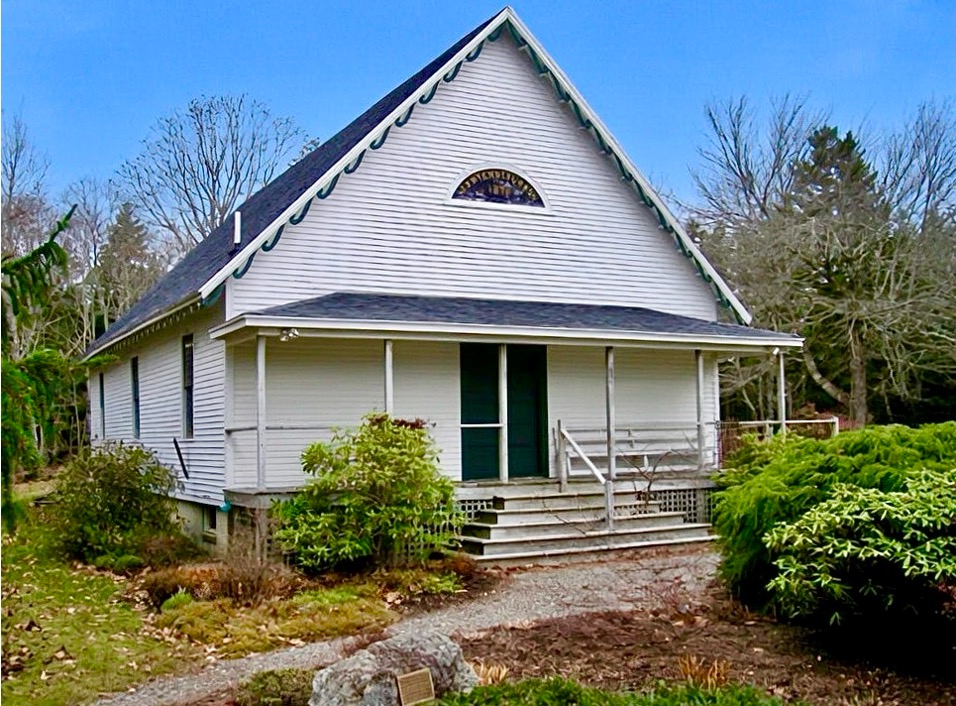
A recent photo




0 Comments