Tarr-Eaton House
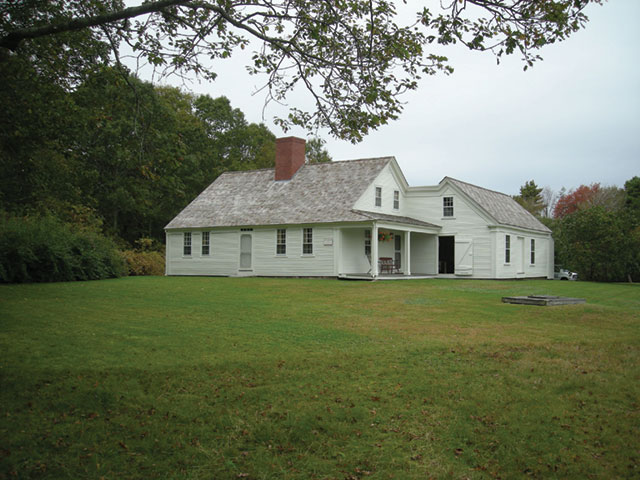
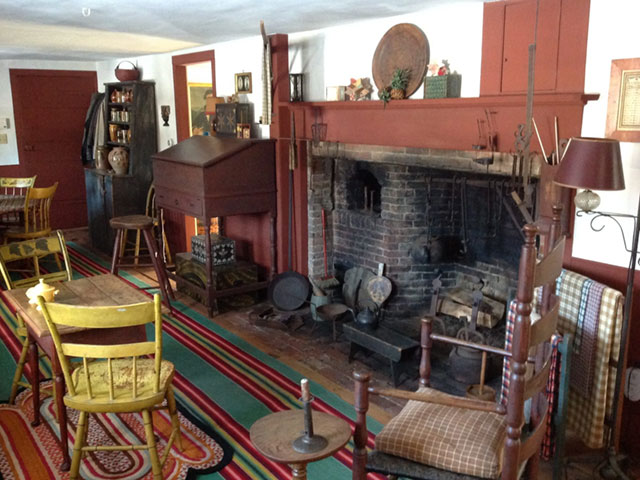
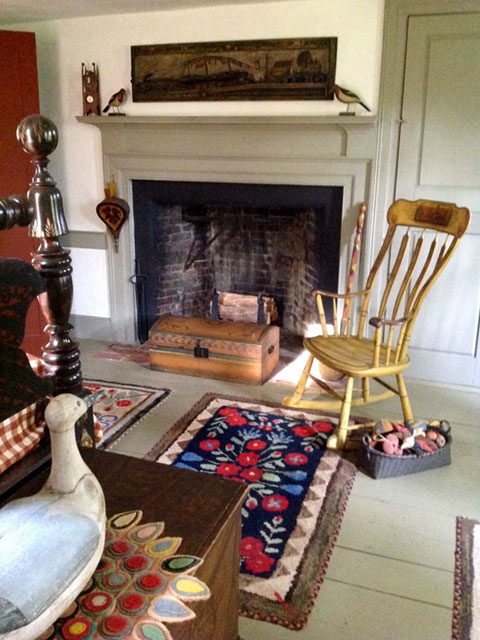
Tarr-Eaton House was built in 1783 by William Tarr Jr. and was most likely built over an earlier structure that was constructed by his father. Tarr was a veteran of the American Revolutionary War, and he is recorded as operating a tavern in the town as well as serving as its constable. Tarr sold the property in 1811 to Joseph Eaton who was the son of Elisha Eaton and it remained in the Eaton family until 1895. Two daughters of Joseph, Mary and Emeline, lived in the house all of their lives and are the prototypes for the characters Aunt Roxy and Aunt Ruey in Harriet Beecher Stowe’s novel The Pearl of Orr’s Island.
The Cape style structure was the house of every man during the last half of the 18th and first half of the 19th centuries, mostly built as subsistence farmsteads and often enlarged to accommodate growing families and improved economic conditions. The house was constructed in the Federal style and is a single-story wood-frame structure with a side gable roof and a large center chimney. The main façade faces south consisting of two windows on either side of the main entrance topped by a transom window. A porch and carriage shed were annexed on in 1845-50 and the front façade and new structures were finished in the Greek Revival style.
The Tarr-Eaton House was listed in the National Register of Historic Places in 2001.