Elijah Kellogg Church
The church is blessed to be in sight of its first and second Meeting Houses. It has also been in service to this community since before the Revolutionary War. It became the Elijah Kellogg Church, in honor of Rev. Kellogg’s ministry, in the 1930s. It is said, in a monument to Kellogg and the church in Harpswell, that its steeple is the last to be seen, and the first to come into view, by sailors on the water.
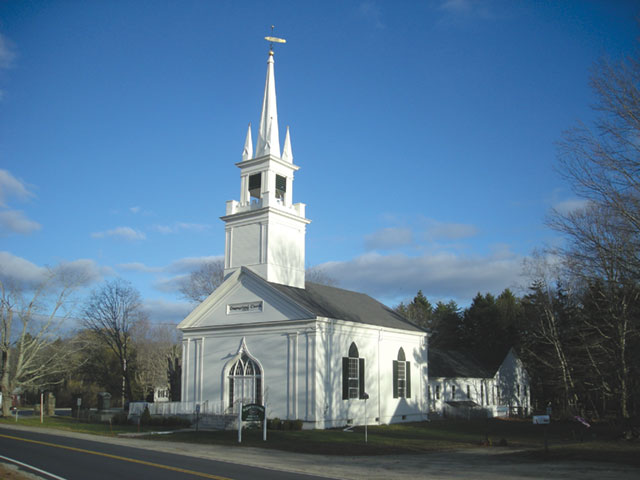
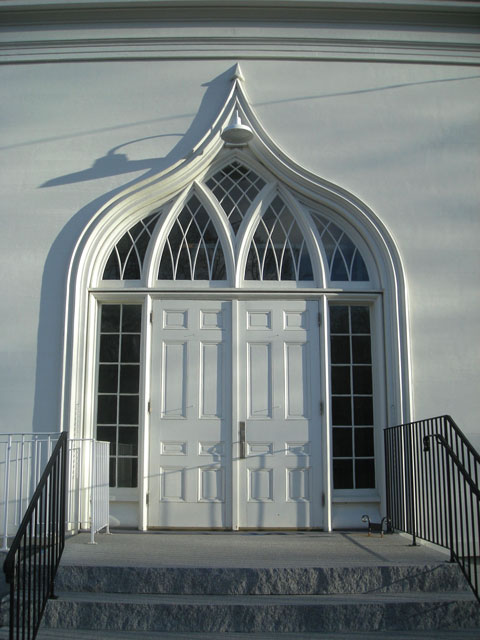
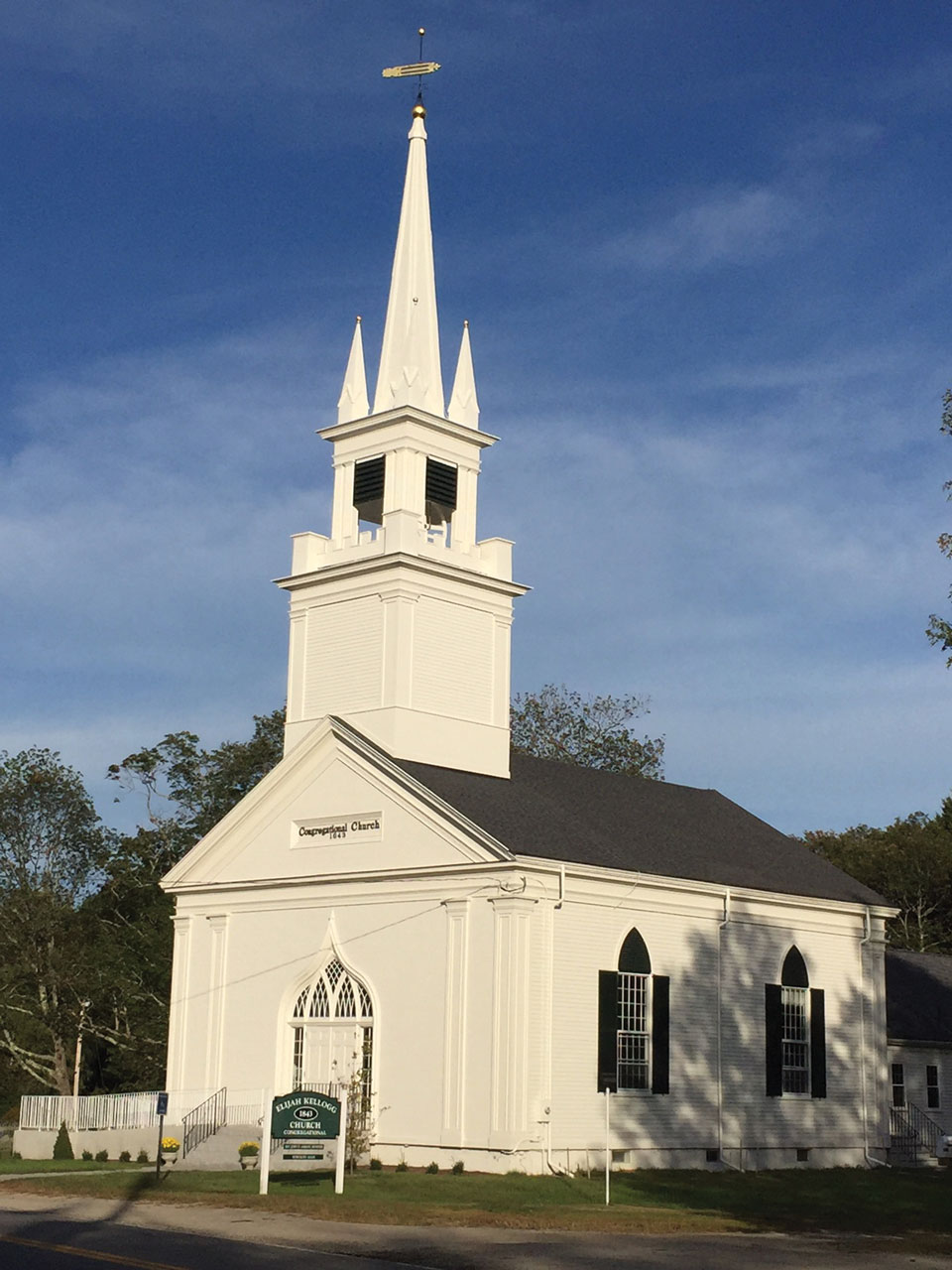
Elijah Kellogg Church was constructed in 1843 and is a well-preserved example of Greek and Gothic Revival architecture. In addition, it is notable for whom it was named after, Reverend Elijah Kellogg, a well-known mid-19th-century writer of children’s books. It is a single-story wood-frame structure with gable roof and exterior finished in clapboards and a granite foundation. The roof is topped by a multi-stage tower with the short first stage finished in clapboards, the taller second stage having corner pilasters, and an open belfry with an entablatured cornice supported by pilastered posts and a steeple above. Typical of the Gothic Revival style is the prominent feature of the main entrance, which is set in an ogee-carved archway with tracery windows and flanking the doors. Prominent pillars are set at the building corners, rising to a full triangular pediment. The side walls have two sash windows, articulated by pilasters, topped by lancet-arched louvers. The church was listed on the National Register of Historic Places in 1979. The church was built in response to a controversy over ownership of the old Town Meeting House, which was built before the principles of separation of church and state, and was used for both town and religious functions. The first pastor, Rev. Elijah Kellogg, was then a recent graduate of Bowdoin College. He served as pastor until 1854.