by Brad McFadden
My great-grandfather, Nelson McFadden, grew up in Topsham, Maine. Through researching his family roots and genealogy, he found a deposition given by my 7th great-grandmother, Jane, in 1766, describing a site on Merrymeeting Bay where she and her husband, Andrew McFadden, were one of the first families to settle after sailing from what is now Northern Ireland. In 1950, Nelson purchased a 148-acre parcel of land in Bowdoinham including that site, and since his death in 1972, the property has remained in the family.
Andrew McFadden, my 7th great grandfather, was born in 1675 in Inverness, Scotland and at 18, he emigrated to Garvagh in Northern Ireland. He married and had four sons before his first wife’s death in 1702. He remarried Jane Lindsey in 1704. In June 1718, the family left Northern Ireland to sail to the New World with their Presbyterian minister, James Woodside, aboard the ship McCallum. Jane and Andrew rowed into Merrymeeting Bay on September 8th.
In 1720 they had a daughter named Somersett, followed by son, Daniel, in 1722. Later that year, the Norridgewock Indians attacked and burned the settlements of the Pejepscot Proprietors including the McFadden homestead. The McFadden’s with their children and limited possessions retreated in a canoe to Arrowsic Island where they lived the remainder of their lives.
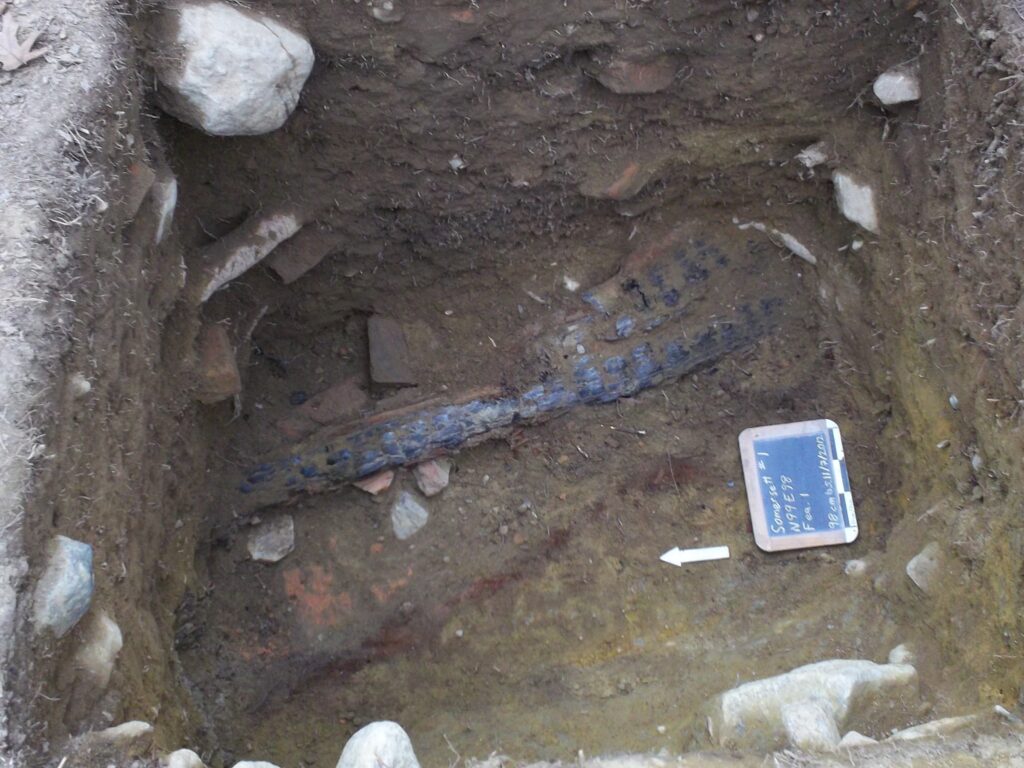
In 2012, Maine Ulster Scots approached me about doing an archeological dig on the McFadden property. Archeologist Pam Crane, surveyor John Mann and I excavated our first unit in November. When I uncovered a burnt timber in that unit, it was reasonable proof that this could be my family’s first home, and that there had been a fire many years ago on this site. The dig continued intermittently from 2013 – 2019 with a dozen dedicated volunteer diggers, sifters, and recorders.
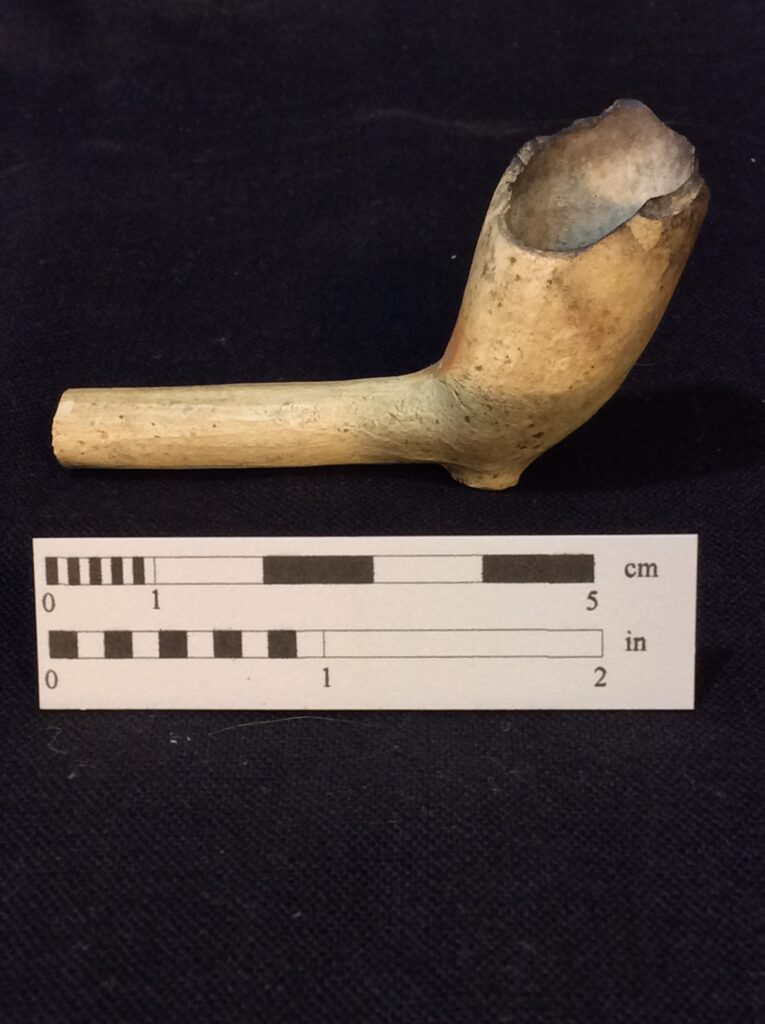
We found hundreds of artifacts in the cellar hole including nails, pieces of glass, brick and burnt wood as well as some which are of personal significance to me. I unearthed a mostly intact clay pipe. Had my 7th great-grandfather set this pipe down, only to be picked up by me almost 300 years later?
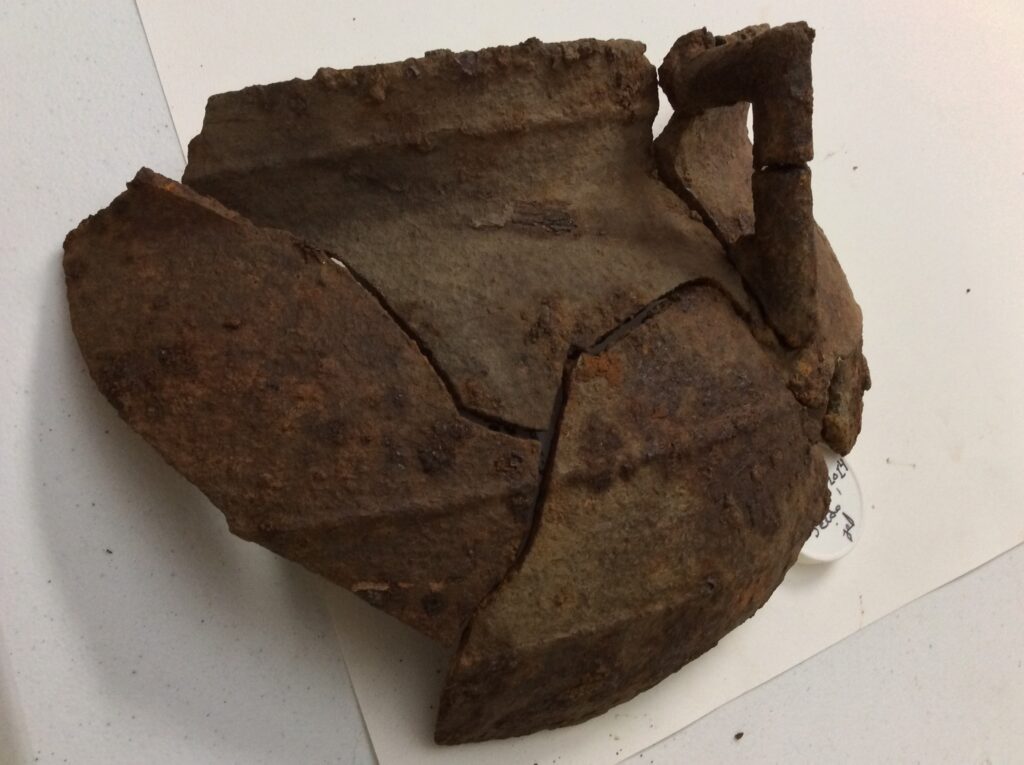
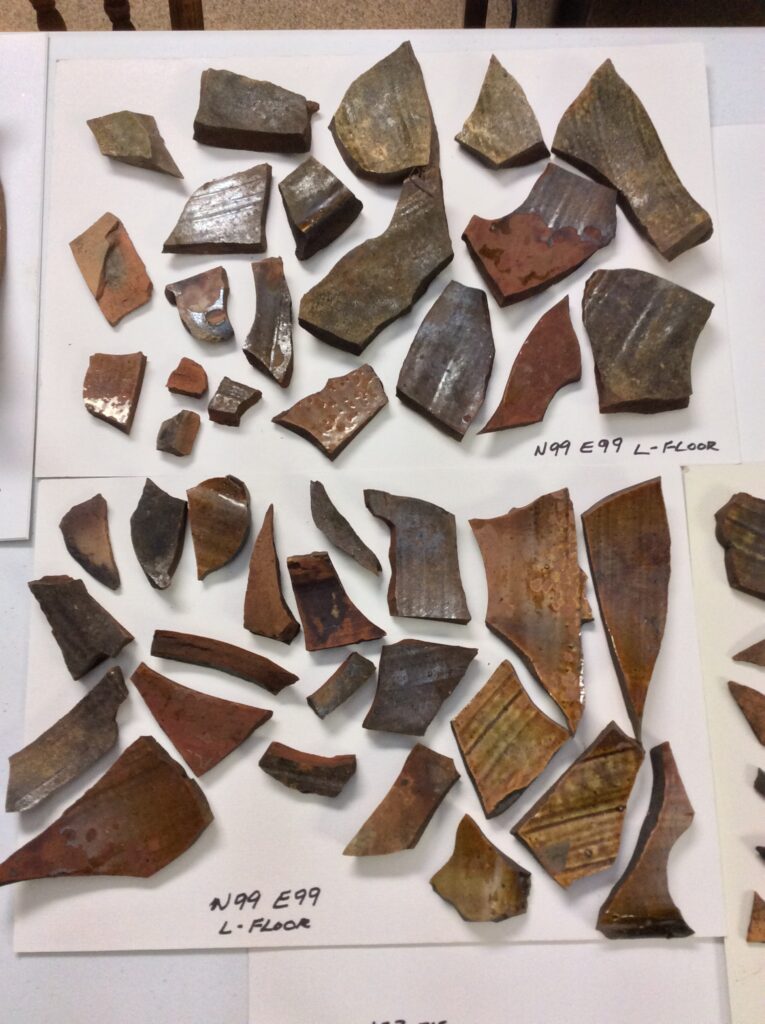
In 2015 we found six pieces of a cast iron kettle. We also had a unit with a few pottery shards, and we eventually found hundreds of pieces in adjoining units. My wife and I “puzzled” it back together, and the resulting vessel, measuring 13” high with a glazed interior, was determined to be from North Devon.
In 2016, I spent time at the Georgetown Historical Society and the Knox County Registry of Deeds, researching where Andrew and Jane might have lived after escaping the Indian raid. I located the foundation of a building known by locals as the McFadden Farm with a small graveyard between the foundation and the shore. There are several McFadden’s buried here but no stones for Andrew or Jane.
To own a piece of the property where your ancestors built their first homestead in a new world has been an incredible experience. I hope to continue to delve into my family’s history, just one version of the journeys of all Ulster-Scots who overcame great adversity to become “evenly distributed” across the United States.